February 24, 2026
Self-hypnosis
I was recently asked whether self-hypnosis is real.
Habit ChangeSelf ImprovementStress
Continue Reading →February 24, 2026
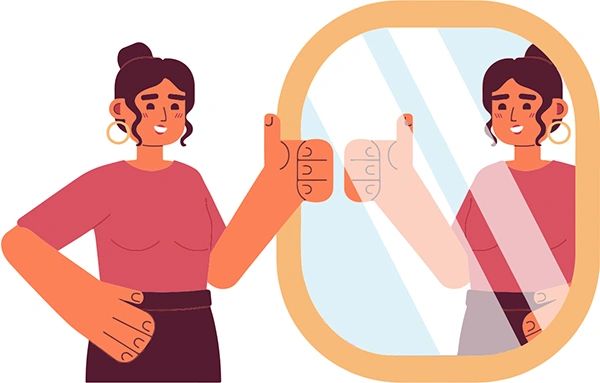
I was recently asked whether self-hypnosis is real.
It is. We practice it every day.
Every time we tell ourselves, I can't, or This won't work, or Something will go wrong, we are guiding the mind—gently, persistently—toward limitation. The brain leans this way naturally. Psychologists Paul Rozin and Edward Royzman called it the negativity bias: the mind's ancient habit of scanning for danger. It evolved to protect us. It does not know the difference between survival and self-doubt.
Dr. Rick Hanson writes about the negativity bias and what you can do about it. He decodes the science and others like it. He doesn't call his solutions positive self-hypnosis, but it is.
Bottom-line it, attention is direction, and direction can be chosen.
On January 23, I lost my right foot in a diabetes-related amputation, with more to come. As some of you know, my hypnotherapy work has paused. My life is rearranging itself in ways I can not predict and never thought would happen to me.
There is a question that echoes after any trauma: Why?
It is a heavy question. It has no satisfying answer.
Self-hypnosis, as I practice it, turns my attention toward different questions: What now? How do I move forward? Where is the next small step?
I do not deny what has happened. I am guiding my mind through it with a "determined and persistent" effort.
With support, and with practice, fear loosens its grip. Not because the future is certain, but because attention has shifted.
That is all self-hypnosis is: the quiet, deliberate act of choosing where the mind rests.
When I return to my work, I will share more about the three-step practice that steadies me now.
Until then, I am practicing what I teach.
Even though all of our appointments have been canceled, feel free to email me, or text me (818-533-5393.) I'd love to hear how you could use self-hypnosis to move forward.
December 18, 2023
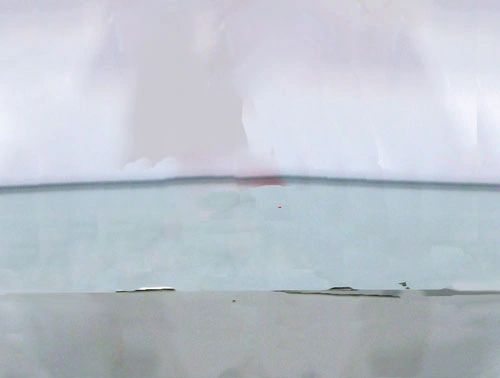
I was cleaning up the background in a photograph I had taken of an object at the Smithsonian. There was something about the cleaned-up background though. I removed the subject completely and pushed the background into the soft and subtle image it was trying to become.
I recognized it as a memory of a very pleasant, quiet day, sitting near the shore of the San Fransisco bay in Tiburon. Fog obscured the City of San Francisco in the distance. You could see the island. There were a few boats in the bay. The water was steel gray-green banded with steel gray-blue. It almost matched the overcast sky. I was warm inside my jacket, sheltered comfortably by stands of California Live Oak on either side of me. A stiff breeze pushed small chop across the Bay's surface. The fog horns were muted, as was the diesel horn from a ship heading out to sea. That day was like finding astounding beauty in nothing.
Then, years later, I rediscovered an echo of that memory, hiding, unexpectedly in the background of a photo. What will you discover today?
"Earth's crammed with heaven." –Elizabeth Barrett Browning, Aurora Leigh
from Steven Lee December 2023
December 24, 2022

Communication is important. That seems like a no-brainer yet lack of communication between loved ones is one of the things that keeps me employed. Therapy is all about correcting bad communication or lack of communication with others and within one's own heart.
Communicating isn't really the issue though. People talk, email and text all over the place. Particularly text, which by the way, is the least communicative communication in the history of hello. Real communication happens in what, when, and how a feeling or thought is communicated.
High tech is fine. We like it. Letters, phone calls and hugs are better though. Especially hugs. We really like hugs.
This season, hold joy in a bear hug and share it!
April 16, 2022
To our Health sciences, Body and Mind are separate areas of academia and practice, Medicine and Psychology. But our bodies do NOT make that distinction. A growing realization in science is that body/mind needs to be seen as a whole.
Go to About Hypnosis > Documentation, scroll down to Food and Mood, download the article titled: Food Addiction.pdf
It's an article written by respected researchers Belinda Lennerz and Jochen K. Lennerz, published in Clinical Chemistry in 2018.
In a nut shell, if you have a problem with food, understand you are not weak, it's NOT just about behavior. There's something biochemical going on. Nobody is quite sure what it is.
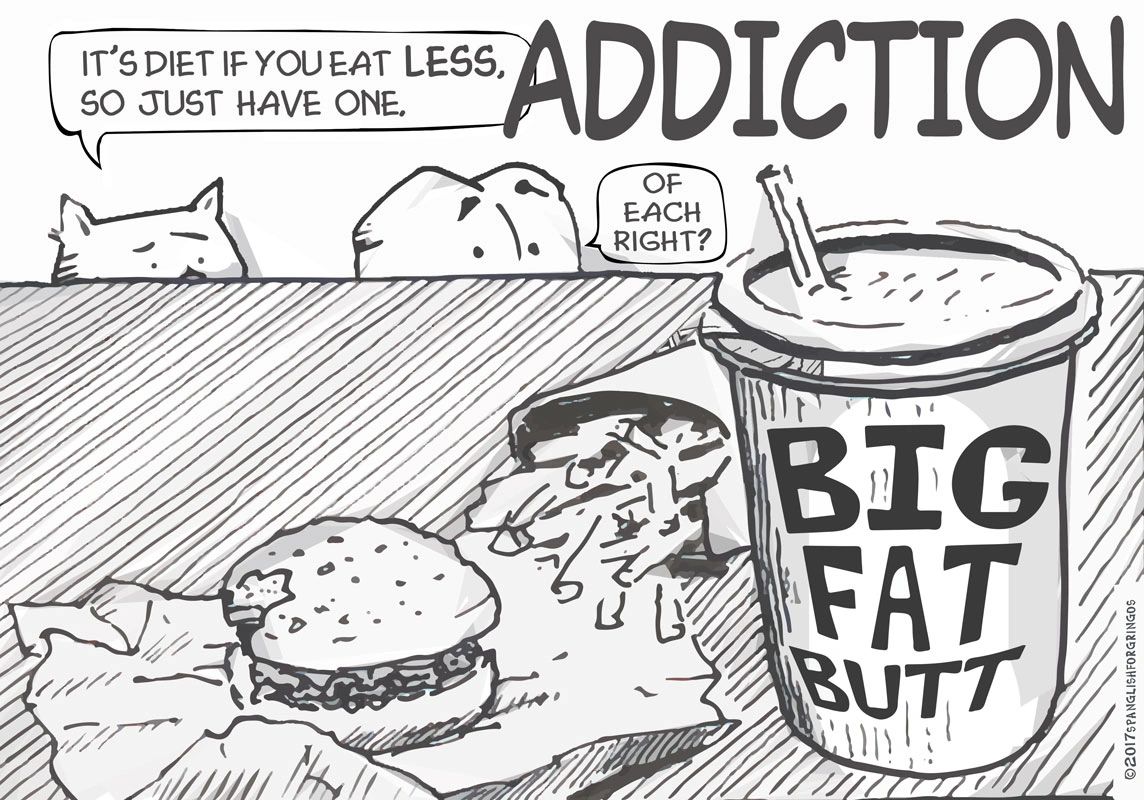
The idea of food as an addiction was laughable not long ago. After all, a Big Fat Butt Double Double Chili Cheese Burger is not heroin. But wait, to the body, considering what's actually happening biochemically in the brain—particularly for some of us—it very much IS like heroin. Researchers are not laughing any more. This problem is showing up all over the place. It's not just about weight. One researcher called it "a major factor behind all non-communicable human illness." That would include mental illness too, by-the-way.
My feeling? There's something seriously wrong with our food supply. At any rate the more you know the better. Read up.
March 24, 2022

Professor Amy Cuddy PhD says your body language may shape who you are. Body language not only telegraphs messages to others—most of us know this—but sends the message to ourselves as well. And we can change our life through posture. Good heavens, Miss Manners was right!
Those of you having experienced hypnosis for any length of time have felt its curiously refreshing effect, a renewed sense of confidence, as if by magic, gained and sustained, after a session. If you've worked with me, you've heard me say, "It's the simple things, breathing and smiling…"
You may not realize that a part of the success of hypnosis lay in repeated physical action. Setting aside hypnotic suggestion, just laying back, breathing, and being willing, or, being willing to BE willing, can produce amazing life changes.
Sound like a mind game? It is. It's what the brain is good at. And our brain controls our hormones, and hormones control our mood. Mood affects openness to possibility. Mind/body/environment!!!
Cuddy presents a very simple concept, and the science behind it, that assuming a power stance for 120 seconds BEFORE entering an evaluation situation will alter the outcome. Even if it's a self-evaluation situation—as in a goal or a task.
That same mind/body/environment feedback loop is also true for many simple, health-oriented, physical routines: meditation, walking, journaling…
Of course we do it, we like it, then "forget" to make a habit out of it. THAT is the mind game our brain plays with itself in it's hard-wired resistance to change. Ms. Cuddy lights up this topic as well in talking about pushing through a negative thought.
20 minutes with Amy on her TED Talk may change your life—if you let it.
February 10, 2022

All emotions serve a purpose. To be aware of the purpose being served is the trick.
Rage is an extreme form of anger over a perceived wrong, harm, or injustice. In rage we feel enlarged, bigger, and stronger.
Rage also has a neurological flip-side: embarrassment, deflation, and depression. We feel weaker, perhaps even physically smaller. Guilt over having lost control collides with the original sense of injustice. In this contradictory state we fall into the emotional trap of depression. If we suppress rage, we might go straight into depression and stay there.
Both rage and depression are us pretending to be god. We take upon ourselves responsibility for everything. We internalize perceptions of events from the outside world. In this sense rage-filled enlargement and its topsy-turvy twin, belittling depression, are forms of control.
Humans seek control. Or at least the feeling of control. And we become very creative in the means we invoke it and how we justify it. Harmful addictions are often a part of this need for control. They become bolt-on—or value-added—solutions for deeper, rage/depression cycles.
Ironically addictive strategies for control distort or tear us away from the very things that give us true power: family, fellowship, and community.
There are ways to creatively channel the energy of rage and stand aside until the emotional freight train passes, ways to spot and reroute the train before it gets anywhere near our crossing. And there are ways to use the hopelessness of depression as an access to the release found in right-sizing. In either case the exaggerated feelings of rage and depression can be doorways to truth. All we need is to develop the willingness to push the door open, and walk through it!
That is what hypnotherapy can do: help build the willingness to be willing!
Sound like nonsense? Okay. How is the rage working for you? The delusion that rage or depression solve anything is the real nonsense.
December 16, 2021

The Voice comes as a wave of urgency with an impulse toward an action.
"Buy this." "Eat that." "Drink more." "Let's worry about it!" "I can stop tomorrow."
You probably think this is you thinking. Yet it's not thought—not really—it's a habit. Your brain is rehearsing a script so well practiced you don't even realize that it is play acting. Thought-habits, even negative ones, are seductive. They are seductive because they are easy. The brain likes easy.
An aerial view of a water-worn landscape is a great way to visualize what any habit actually is. We tend to think of eroded water channels on a hill in terms of rain and flood, and this does happen, but for the most part hillsides are carved by billions of tiny, tiny drops of morning dew, moisture from the air, settling into the soil, plowing the easiest pathway downhill, moving aside tiny grains of soil and rock as it goes, each morning, over and over again.
This is your brain. It loves to re-think what it already knows. And, like water on a hillside, the more often you think something, the deeper "the channel" becomes.
Trying to quiet the brain completely, stopping those thoughts—for anyone not already a Zen-master—is just south of futile. After all, the brain chatters away at us most of the night—in dreams—as well as all day. That's it's job. And you are in real trouble if you think that babbling is "you."
"A nail is driven out by another nail. Habit is overcome by habit." — Erasmus
What to do! The key to habit change is to head INTO the feeling, EMBRACE the thought! Trying to ignore it is not the answer, struggling with it doesn't work. You've tried that. The answer is acknowledgment and redirection.
Realizing the brain ISN'T YOU—it's just part of you, begin to hear your thoughts as you would those of a very young niece or nephew. Someone you LOVE, so beautiful, cute as a button, so smart, and funny! Their solutions to most everything is hilarious, exaggerated and often wrong, but you are amazed by how fast they learn! And how creative they are! You tolerate how cranky they can be, sometimes whiny, sometimes afraid. And in those cases you console them rather than berate them.
Practice visualizing your inner voice as a beloved child. Treat your brain's great ideas—invariably to have MORE... NOW—with love and bemusement.
"I WANT MORE CHOCOLATE!!" "WOW! Of course you do! What a GREAT idea, but not right now. Maybe later. Right now lets try to see how much air we can fit in our lungs! Strong! Big! Superman! Superwoman! Ready? GO!"
Breathing games are good. As you and that inner child breathe, the action-urge attached to a thought will pass. It's just bio-chemistry. You can allow the feeling to pass without acting.
Looking at your wonderful creative brain as something other than yourself, as a child, well-loved and admired, literally retrains your brain to treat itself better. You can both, together, create a NEW HABIT of surfing an urge.
There are an infinite number of imaginary games that will allow pattern interruption, disassociation, empathy and self-love. Try thinking of a few. Whatever you might do with a little kid will work with your brain.
Call me if you need assistance. 818 533-9353
November 1, 2021
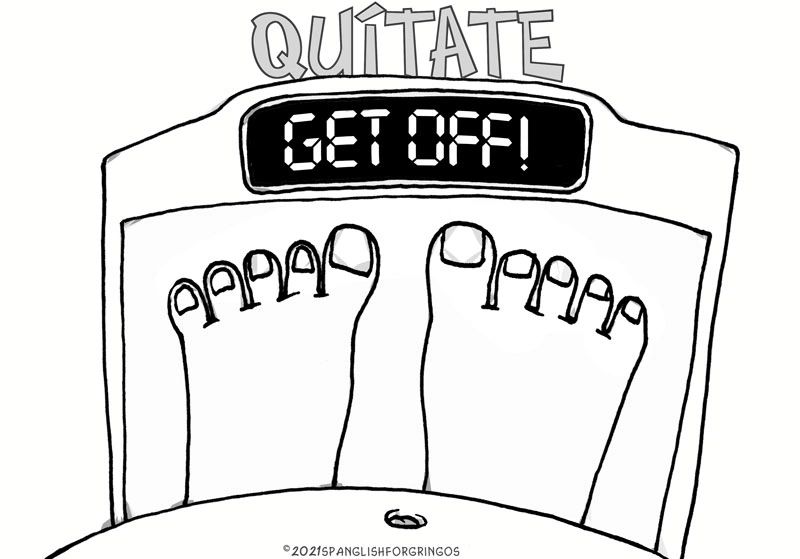
Though it might feel like an addiction to you, sugar is NOT an addiction. You need sugar. You'll die without it. You are hard-wired to seek sugar (in all of its forms) and to remember where you can get it.
You MAY however, have a carbohydrate sensitivity, an insulin de-sensitivity actually. The short story is, your body isn't processing the sugar it has so it wants more. And if so, you MAY be stuck in a Medical gray area. Doctors tend to look at overeating as a behavioral problem, as if it isn't a physical thing—which contradicts your own obvious experience. You know that when you eat sugary foods it feels like a switch turns on, the "More" switch, and you want more food, more sugar—even when you are not hungry. THAT is NOT behavior, it's biology.
Hypnosis can help. The cartoon is a panel from my strip Spanglish for Gringos. I use it here because this sugar thing knows no gender, culture or language boundaries!
October 14, 2021

Arrogance or Positive Self-Affirmation?
Convincing others of your own awesomeness is one thing. Convincing yourself is quite another.
Most of what we call "thinking" is more like rehearsing a play, with our internal neural actors changing their lines a little depending on the performance. Most of us have a few set plays our brains love to rehearse. A common one is: "This Always Happens to Me." Another, "I Would be Happy If Only…" and a perennial favorite playing in most brains near you, "I'm not good (rich, pretty, thin, young) enough."
Law of Familiarity and the Law of Repetition are founding principles of hypnosis and self hypnosis. We already identify with the internal voice, so its rehearsed lines are familiar to us. And we repeat them incessantly. They quickly become hard-wired habits, and as a habit we forget that we are repeating ourselves, just as you don't have to remember how to walk, you just do it.
Let your brain think the same thought enough times and it will make a habit out of thinking it—good or bad—and, you believe it. Looked at it in this manner, most "Thinking" is a form of self-hypnosis.
Now consider: if you let the brain do what it does, generally, it will go negative. You know that in self-talk, it's easier to believe and repeat the bad about yourself (and others) rather than the good. This is true for most of us, particularly in the first 40 years of our lives.
It's interesting in that in most of our thoughts our brain will attempt to predict the future based on past memories—where we fall straight-way into the habit of predicting trouble. Even more interesting, some portion of our memories—particularly negative or unpleasant memories—are confabulations, meaning our brain is somewhat of a creative liar. Yet we believe it.
So what are you hypnotizing yourself to think today? What are you telling yourself you can't do? Be aware of how often your internal thoughts go negative. Understand the internal dialog ISN'T you, it's only a memory pattern, a habit, not a truth. And you can change any habit by reinforcing a better habit.
July 16, 2021
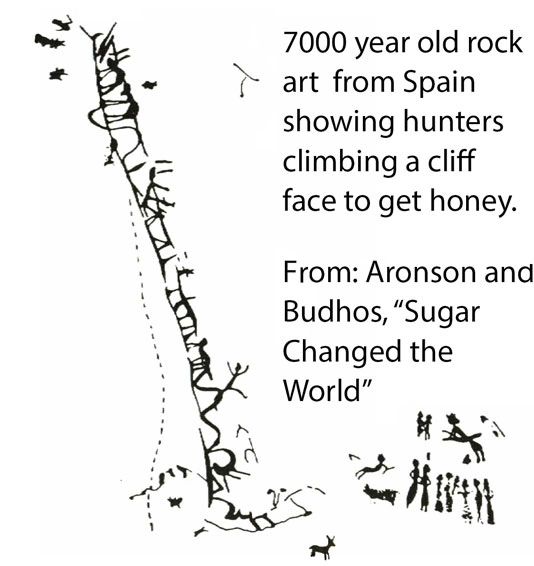
Historic Sugar! We go to any lengths.
We associate sugar with weight gain. I suggest you also associate it with depression, worry, anger, anxiety, reoccurring pain, divorce. So much of what I deal with as a Hypnotherapist has over-eating lurking or poor diet in the background. Over carb-ing specifically.
Note: I am NOT a licensed Nutritionist nor Dietician. Nor have I any scientific research credentials. I share this person-to-person, because I AM a diabetic with severe neuropathy. I am in, and have been in, 12-step groups with over 30 years of experience dealing with and helping others (with varying degrees of success) to deal with the negative impact of carbs, specifically sugar, and sugar/alcohol on our bodies and minds. That little corn-bastard sugar/alcohol just might be the physical trigger in alcoholism! According to research, it IS the trigger in over-eating.
In one form or another sugar has been kicking my ass for decades. Some of us seem to have what is being referred to as carbohydrate sensitivity, I sure do, probably a genetic trait.
Sugar is a carbohydrate. There are others. Carbohydrates play a huge role in body building, mood and mental health, both in good and bad ways. Individual effects range wildly and are usually NOT always associated with weight-gain. Some carb sensitivities cause weight-loss! Another common affect of carb sensitivity is a craving for sugar AFTER you've eaten, usually late at night when there is little else to distract you! Others are cyclic depression or hair-trigger anger.
I'm not going to rant on about it. I'm going to give you some information and let you decide.
Firstly, in America, today, corn is a major, and growing, source of sugar, beets being another, both replacing, year by year, an older source: cane sugar. A truly ancient source of sugar for humans, bee's honey, lags far behind all of the others in the modern world.
Know that in deciding to indulge in your "guilty food," you may not have as much choice in wanting it as you think you do.
February 24, 2026
I was recently asked whether self-hypnosis is real.
December 18, 2023
I was cleaning up the background in a photograph I had taken of an object at the Smithsonian.
December 24, 2022
Communication is important. That seems like a no-brainer yet lack of communication between loved ones is one of the things that keeps me employed.
April 16, 2022
To our Health sciences, Body and Mind are separate areas of academia and practice, Medicine and Psychology. But our bodies do NOT make that distinction.
March 24, 2022
Professor Amy Cuddy PhD says your body language may shape who you are.
February 10, 2022
All emotions serve a purpose. To be aware of the purpose being served is the trick.
December 16, 2021
The Voice comes as a wave of urgency with an impulse toward an action.
November 1, 2021
Though it might feel like an addiction to you, sugar is NOT an addiction. You need sugar. You'll die without it.
October 14, 2021
Arrogance or Positive Self-Affirmation?
July 16, 2021
We associate sugar with weight gain. I suggest you also associate it with depression, worry, anger, anxiety, reoccurring pain, divorce.